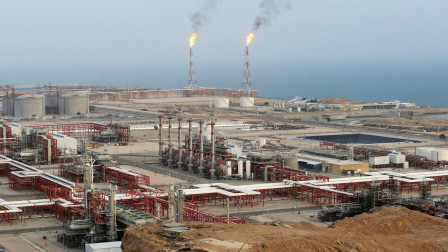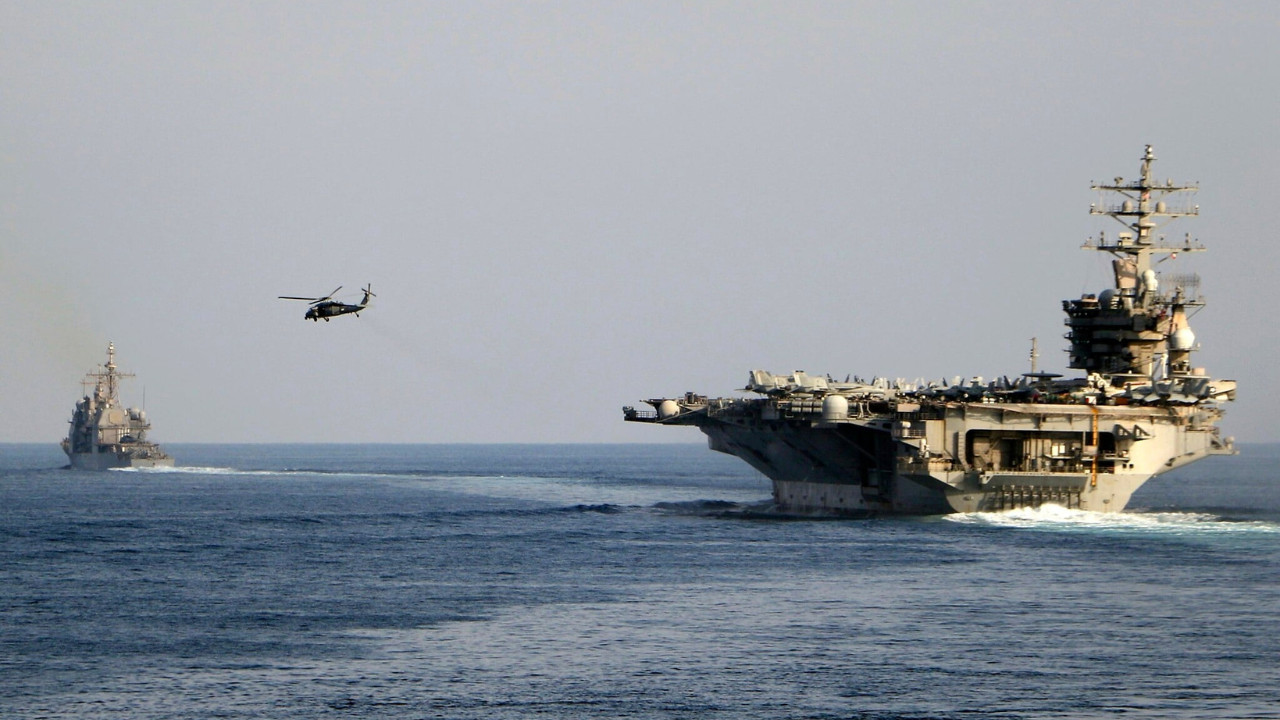
The Strait of Hormuz crisis has plunged most of the world's nations into an oil and gas crisis. (Image X @GeneralMCNews)
Washington: The Strait of Hormuz crisis has plunged most of the world's nations into an oil and gas crisis. Iran has blockaded the Strait of Hormuz following attacks by the United States and Israel. Whenever the world finds itself entangled in such crises, various ideas—some of them startling—tend to surface. One such proposal involves utilizing nuclear explosions to carve out an alternative maritime route. Although this may sound like a work of fiction, there was a time when the concept of creating a new shipping channel using nuclear blasts was given serious consideration.
According to a report by 'The Conversation', the roots of this idea lie in 'Project Plowshare'. Launched in the late 1950s, this American initiative was promoted under the banner of "Atoms for Peace." Its objective was to explore "peaceful" applications for nuclear explosions—ranging from mining operations to the construction of large-scale infrastructure projects. Amidst the ongoing crisis in the Strait of Hormuz, this project is once again becoming a subject of discussion.
According to the report, among the various options considered, the proposal to construct canals using nuclear explosions was given the most serious attention. The fundamental premise was that nuclear devices could function as incredibly powerful earth-movers. While conventional excavation methods require months or even years to complete, a single nuclear blast could—at least in theory—vaporize millions of cubic meters of rock and soil in the blink of an eye.
Proponents of this concept believed that it would make the realization of massive construction projects far more feasible—including the excavation of canals that, if attempted using traditional methods, would either prove prohibitively expensive or require an inordinate amount of time to complete.
The report further notes that U.S. planners investigated the feasibility of utilizing a series of nuclear blasts to create a new sea-level canal—either as an alternative to the existing Panama Canal or as a route cutting through parts of Colombia. Some proposals even contemplated the use of hundreds of nuclear detonations to carve out such a route.
The most detailed proposal for the Panama route involved a plan to conduct hundreds of nuclear explosions. U.S. planners estimated that 294 nuclear detonations would be carried out across 14 distinct clusters, yielding a total explosive power equivalent to 166.4 million tons of TNT. This is more than three times the power of the largest thermonuclear bomb ever tested. Although those Cold War-era plans focused on Latin America, today, these very concepts are being invoked in the context of the Strait of Hormuz.
A report by 'The Conversation' notes that the Strait of Hormuz remains one of the world's most critical energy corridors, through which a significant portion of global oil shipments passes. It is this fact that repeatedly raises the question: what if there were an alternative route? It is worth noting that during the 1960s, nuclear technology was viewed through a lens of optimism and boundless potential. Numerous research papers from that era even detail how engineers believed that nuclear explosions could displace massive quantities of earth in mere seconds—a capability that could potentially make large-scale projects significantly faster and more cost-effective.




Copyright © 2026 Top Indian News